 |
| Left to Right Sedum Autumn Joy, Perovskia Atriplicifolia Russian Sage, Pennisetum Alopecuroides Fountain Grass, Repeat Front: Coreopsis Verticillata 'moonbeam' Tickseed, Kalimeris Blue Star False Aster |
Wednesday, August 7, 2013
Lynn's Fall Garden


Tuesday, August 6, 2013
Morning Inspiration

Talking about our problems is our greatest addiction. BREAK THE HABIT! Talk about your joys.
Rita Schiano
More inspiration found on this website here.
Sunday, July 28, 2013
Bulb Planting Guide

Spring-flowering bulbs are the earliest plants to bloom, with snowdrops and winter aconites flowering in early March in much of New York. You can plant a variety of spring-flowering bulbs to flower from very early to late spring, providing a nearly continuous sequence of bloom. Snowdrops and aconites are soon followed by crocuses, scillas, and chionodoxas. Then come hyacinths, daffodils, and tulips. You can plant tender bulbs or other annual flowers to fill in spaces left after the foliage of spring-flowering bulbs dies back to the ground.
Thursday, July 25, 2013

Tuesday, July 23, 2013

Thursday, June 27, 2013
Funny
YARD WORK - AS VIEWED FROM HEAVEN
. (overheard in a conversation between God and St. Francis):
God: Hey, St. Francis, you know all about gardens and nature;
what in the world is going on down there in the U.S.? What happened to the dandelions, violets, thistles and the stuff
I started eons ago? I had a perfect no-maintenance garden plan.
Those plants grow in any type of soil, withstand drought, and
multiply with abandon. The nectar from the long-lasting blossoms
attract butterflies, honeybees, and flocks of songbirds. I expected
to see a vast garden of color by now. All I see are patches of green.
. .
St. Francis: It's the tribes that settled there, Lord. They are called the Suburbanites.
They started calling your flowers 'weeds' and went to great lengths to kill them and
replace them with grass.
. .
God: Grass? But it is so boring, it's not colorful. It doesn't attract butterflies,
bees or birds, only grubs and sod worms. It's temperamental with temperatures.
Do these Suburbanites really want grass growing there?
. .
St. Francis: Apparently not, Lord. As soon as it has grown a little, they cut it....
sometimes two times a week.
. .
God: They cut it? Do they bale it like hay?
..
. St. Francis: Not exactly, Lord. Most of them rake it up and put it in bags.
. .
God: They bag it? Why? Is it a cash crop? Do they sell it?
. .
St. Francis: No sir, just the opposite. They pay to throw it away.
. .
God: Now let me get this straight...they fertilize it to make it grow and
when it does grow, they cut it off and pay to throw it away?
. .
St. Francis: Yes, sir.
. .
God: These Suburbanites must be relieved in the summer when we cut back on the rain
and turn up the heat. That surely slows the growth and saves them a lot of work.
. .
St. Francis: You aren't going to believe this Lord, but when the grass stops growing
so fast, they drag out hoses and pay more money to water it, so they can continue
to mow it and pay to get rid of it.
. .
God: What nonsense! At least they kept some of the trees. That was a sheer stroke
of genius, if I do say so myself. The trees grow leaves in the spring to provide beauty and
shade in the summer. In the autumn they fall to the ground and form a natural blanket to
. keep the moisture in the soil and protect the trees and bushes. Plus, as they rot, the leaves
become compost to enhance the soil. It's a natural circle of life.
. .
St. Francis: You'd better sit down, Lord. As soon as the leaves fall, the Suburbanites rake
them into great piles and pay to have them hauled away.
. .
God: No way! What do they do to protect the shrubs and tree roots in the winter to
keep the soil moist and loose?
. .
St Francis: After throwing the leaves away, they go out and buy something called mulch.
They haul it home and spread it around in place of the leaves.
. .
God: And where do they get this mulch?
. .
St. Francis: They cut down the trees and grind them up to make mulch.
. .
God: Enough! I don't want to think about this anymore. Saint Catherine,
you're in charge of the arts. What movie have you scheduled for us tonight?
. .
St. Catherine: 'Dumb and Dumber,' Lord. It's a really stupid movie about . . . .
. .
God: Never mind -- I think I just heard the whole story from Saint Francis!
Friday, April 19, 2013
Flower Study..Ranunculus...Persian Buttercup
 |
| Amazing Grace |

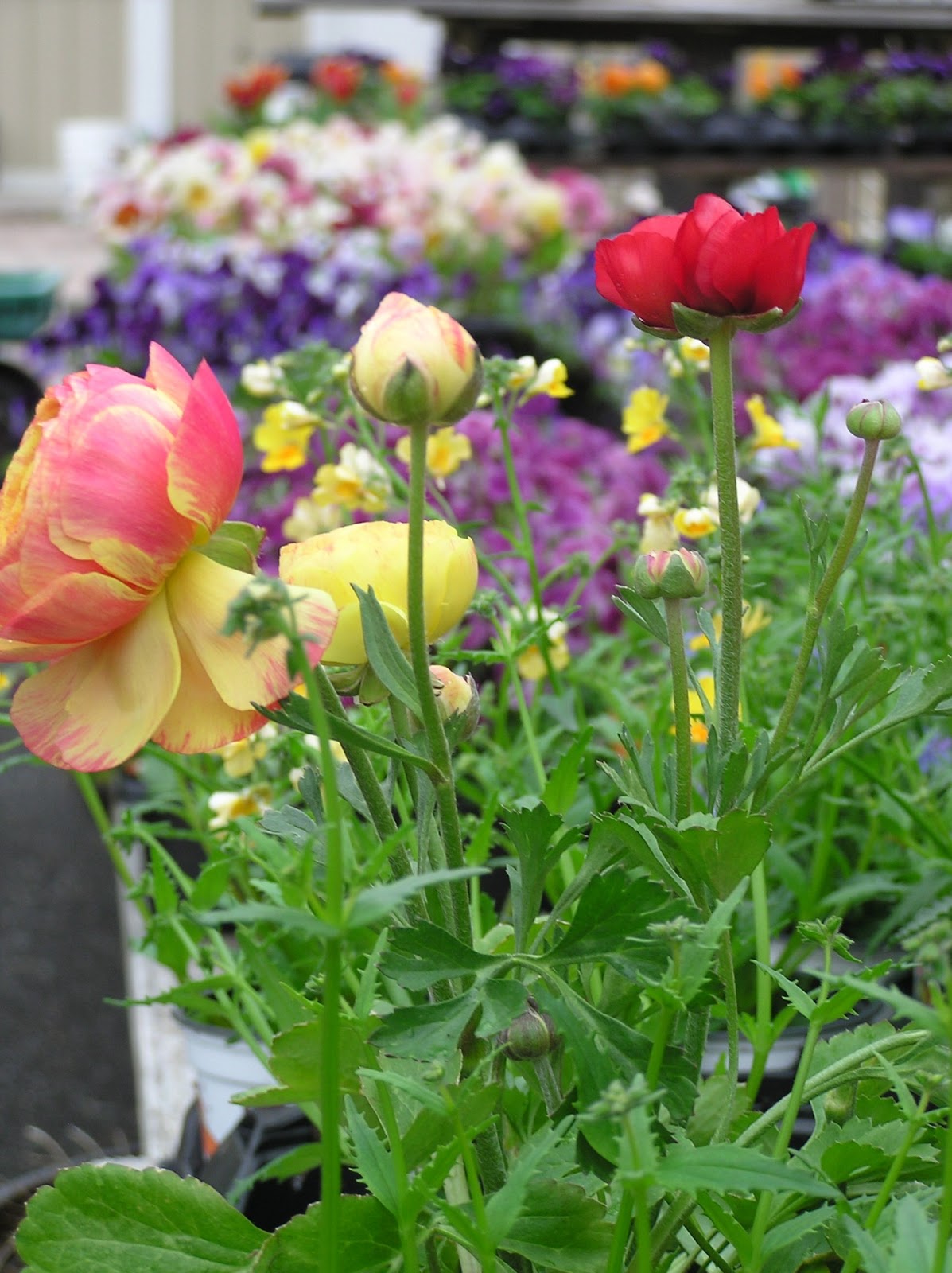


This is an experiment! Learning as I go....
***These did much better in pots, plant in the sun,waster every other day. Short lived, beautiful spring flower. Didn't do well at all in the ground. Another variety is a Persian buttercup, taller, Want to try those next year.
Tuesday, April 16, 2013

Friday, April 12, 2013
Ranunculus are better known to most people as Buttercups. Their beautiful
double flowers look almost like miniature peonies, but their color range is much wider includingred, white, yellow, pink, gold, and orange. The Persian reference in the common name is from the
legend that a shy, handsome Persian prince died of longing because he was unable to declare his
love for a nymph. After his death he was changed into the flower we know today. Persian
buttercups become available as blooming pot plants in late winter and are a wonderful spirit-lifter
until plants begin to bloom outside.


Subscribe to:
Comments (Atom)